

One of the most important considerations for any SME in Australia is financial management. Two areas- accounts payable (AP) and accounts receivable (AR) are very sensitive to attention. Accounts payable give the amount one has to provide to the supplier, and accounts receivable give the amount due the customer. Pre-payment, minimisation of administration costs and the latest financial data may also be used to speed up these processes. Automation, the clarification of policies, and periodic monitoring will allow companies to stay stable and establish better relationships with customers and suppliers.
Explaining Accounts Payable and Receivable for SMEs
Accounts payable is money a firm owes to suppliers, and accounts receivable involves money customers owe to the firm. The management of the two can provide timely payments and collections. Poor use of cash flow might create problems with suppliers, could miss out on providing business opportunities and may result in mismanagement. In the case of SMEs, it is necessary to monitor AP and AR on a regular basis in addition to employing the correct tools. This will assist in having smooth operations day by day, prevent any financial pressure and ensure the continuation of the business without hindrances.
The Importance of Streamlining AP and AR
It is imperative to streamline AP and AR processes to have positive cash flow. Error occurrence and time-saving techniques are time-saving and automation; clear terms of payment. Prompt AP payments develop trust among the suppliers, and effective AR practices create the urge in customers to pay on time. Through the effective management of these accounts, SMEs can have predictable cash flow, be free of the unneeded delays as well and have time to devote towards the expansion of the business. Automated financial management eliminates the angst of tracking payments or fixing manual posting errors.
Strategies to Streamline Accounts Payable
Automation can greatly improve AP management. Invoice digitisation programs, helpful in payment schedule and error reduction, are time-saving. Setting up strict payment regulations with suppliers can curb misunderstanding and delay payment. Account reconciliation regularly maintains the truth behind the financial records. Although the collection of AP is administratively heavy, outsourcing the process is a possible solution for SMEs that have scarce resources at their disposal. Contracting ensures that billing and making are conducted professionally, and thus, this means that companies can establish effective supplier relationships and also confine delays that affect operations.
Strategies to Streamline Accounts Receivable
Effective control of AR begins with the provision of clear and communicated invoices in a timely manner. All the information, such as terms of payment, date of payments, and communications, should be added, thereby eliminating any form of confusion. By availing several channels of payment, the customers find the way to pay more convenient. Frequent follow-ups on receivable invoices can ensure timely follow-ups with businesses. Discounting to support early payment may boost the flow of cash. Well-spelled-out credit policies and regular account review of customers often discourage bad debts and revenue oblique, and operations run smooth.
Leveraging Technology for AP and AR Management
SMEs can make it easy to handle AP and AR with the help of technology. Accounting software that runs on the cloud facilitates real-time control of accounting invoices, payments, and balances. The possibility of connection with banking allows automating payment processes, eliminating errors and saving time. CRM tools also assist in keeping track of customer payments to enhance the methods of collections. The appropriate technology gives companies visibility, quicker reporting, and insights. SMEs will be able to reduce their processes, eliminate errors and have a stronger control over financial activities by adopting modern tools.
The Role of Outsourcing in AP and AR Management
Delegating AP and AR tasks to third parties is a very helpful technique for SMEs. Professional service providers have systems of invoicing, processing payments, collectibles and reconciliation which is effective. This enables proprietors to concentrate on the core operations without being concerned about the financial activities. Outsourcing minimises human errors, makes the payments on time and enhances precision. Outsourcing AP and AR is a viable practice for SMEs facing constraints with few workforce or cash flow. It will guarantee easier operations and enhance relations with suppliers and customers.
Common Challenges in AP and AR Management
AP and AR are two factors that SMEs frequently find challenging to deal with. Late payments, wrong invoices, and manual methods may interfere with the flow of cash. This late payment of suppliers may destroy trust and cause fines. With a small workforce and a lack of knowledge and experience, it is more difficult to record the information properly. Knowledge of these barriers forms the basis of the elimination of the challenges. By automating, monitoring and regulating policies in a consistent way, these challenges can be addressed to some extent and free SMEs from the burdens of financial stress, and through appropriate policies, a smooth running of business would be ensured.
Building Strong Supplier Relationships
Effective handling of AP is important in ensuring a good relationship with suppliers. Timeous payment of the suppliers instils a sense of reliability and professionalism, which gives one more negotiation power and even discounts. Businesses afforded financial responsibility gain upon themselves, favourable terms that are more flexible with suppliers. Trust is built when clear communication on payment schedules is made, and prompt resolution of disputes occurs. The positive relationships between suppliers may have an important competitive benefit to SMEs they may be able to access the goods and services without interruption and may even reduce the pricing and have priority in the delivery.
Enhancing Customer Satisfaction Through AR
Management of accounts receivable has a direct implication for customer experience. Invoice clarity and the payment options are professional and pleasant. Follow-ups on overdue payments preserve goodwill and thereby guard the cash flow in a timely manner. With good monitoring of AR, the businesses can easily detect business issues lying ahead and send reminders without straining business relations. This builds customer confidence, will lead to repeat business, and will build long-term stability of revenue. Happy customers will even pay on time and become loyal to the company, hence saving the company, even in terms of financial well-being.
The Benefits of Cloud-Based Accounting
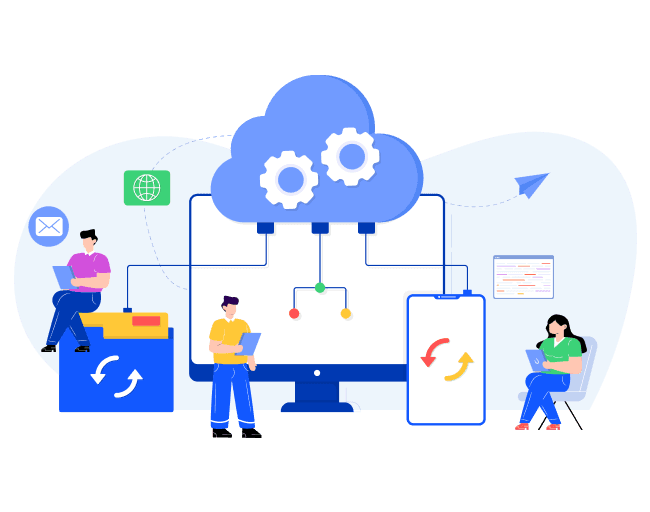
AP and AR of SMEs are managed with the assistance of cloud-based accounting software. It is used to view financial information in real time, decreases the amount of manual error and streamlines repetitive activities. The cloud platforms enable the immediate generation of reports and are interlinked with the banking systems to enable seamless payments. There are security tools to safeguard critical financial information and better monitor slow-paying invoices. Cloud accounting is time-saving, minimises administrative expenses, and gives a clear financial picture. It helps SMEs to make the right, informed decision and become more efficient.
Training Staff for Effective Financial Management
It is paramount to have competent personnel who enable efficient AP and AR. Financial procedures explainable by employees will enable employees to make accurate records and solve any discrepancies, and address any questions. Periodic training ensures the staff are in touch with the accounting tools, regulations and even best practices. Increasing investment in staff development eliminates errors and delays, encouraging accountability in staff. Highly trained personnel enhance the overall financial activities and become the keys towards long-term business expansion, guaranteeing the AP and AR processes are dependable, stable and effective.
Automating Invoice Processing
Automation enhances the processing of invoices, thus eliminating manual labour and inaccuracy. AP automation organises payments and makes payments on time. In the case of AR, auto invoicing monitors due, makes reminders and speeds up collections. Automation gives a greater insight into balances and cash flow, as well as freeing personnel to perform other strategic exercises. SMEs can uphold accuracy, minimise delays, and enhance financial stability without putting more demands on the staff, who also have to do more work. Through automation, companies optimise the business cycle and avoid errors that may affect cash levels or relations with suppliers and customers.
Using Analytics to Improve Collections
Analytics enhance AR management by identifying customer payment trends. Reviewing payment history helps predict delays and proactively manage overdue invoices. Analytics also guide credit policy adjustments and prioritise collection efforts. On the same note, supplier payment monitoring is through AP analytics and cash outflows are optimised. Insights based on data can help SMEs make better decisions, minimise risks and increase efficiency. Analytics enable companies to stay in a healthy financial position in cash flow, reduce bad debts and improve financial controls so that both the AP and the AR play a positive role in overall business operations.
Preparing for Audits and Compliance
Consistently keeping the AP and the AR records well-organised simplifies the audits and compliance. Appropriate audit trails, while effective documentation of invoicing, paying and reconciliation ensures transparency and reduces the penalties. SMEs can also address disparities through regular internal audits to ensure they are addressed prior to being checked by external auditors. Compliance helps businesses avoid being sued and builds trust in investors, banks, and other parties. When financial records are organised, it creates a sense of confidence and reliability and helps in the long-term expansion. An effective record-keeping practice makes the financial processes accountable and completely ready to respond to regulatory conditions.
Reducing Manual Errors in AP and AR
Manual entry often causes mistakes, missed payments, or duplicate invoices. SMEs can minimise these issues by implementing automation tools that validate and track transactions. Accurate entries lead to faster reconciliations and more reliable reporting. Doing less of what is erroneous helps to save time and the confidence of financial management. Lean systems enhance cash flow, enhance supplier/customer relationships as well and enable employees to devote their time to more strategic business activities. To conduct successful financial work, it is necessary to minimise manual errors.
Integrating AP and AR with the Overall Business Strategy
AP and AR activities are supposed to be in line with the overall business objectives. A good AR portfolio can be used to finance an expansion strategy, and streamlined AP will guarantee suppliers are not paid at the expense of the distraction of the cash flow. By associating these functions with budgeting, forecasting, and performance monitoring, it becomes easy to have a glimpse of the financial well-being. By incorporating integration, SMEs will be able to utilise cash flow strategically, make accurate decisions and facilitate growth. An integrated strategy will never leave finance on its own but will make a contribution to long-term business success and operating efficiency.
Monitoring Key Performance Indicators
AP and AR KPIs allow the companies to have an accounting of efficiency in their performance and areas that need improvement. The average payment cycle, days sales outstanding and overdue invoices are some of the metrics that indicate the risk. By measuring these KPIs, SMEs will also be able to address any ongoing errors in time and make their processes more streamlined and cash flow steady. Periodic KPI review also helps in making informed choices and improvement of supplier and customer relations. Monitoring performance will make the business flexible, financially strong and highly placed to achieve sustainable growth.
Conclusion
Australian SMEs that need financial sustainability and growth will need accounts payable and accounts receivable management streamlined. Recurring automation, sound policies, efficient monitoring, and outsourcing where needed facilitate cash flow management and decrease the administrative workload. Optimised AP and AR systems enhance relations with suppliers of goods and customers and enable business owners to concentrate on the core activities. To provide custom advice and professional assistance on AP and AR management, Square Accounting provides complete solutions that simplify your financial management and make your business a success.